
Commercial painting focuses on the appearance and maintenance of business properties like offices, retail stores, and restaurants, while industrial painting uses specialized coatings to protect facilities, machinery, and equipment from corrosion, chemicals, heat, and physical wear. The two differ in coatings, surface preparation, safety requirements, and cost factors.
Choosing the wrong type of painting service can lead to premature coating failure, wasted materials, and unnecessary expense. Understanding these differences helps property owners, facility managers, and business operators match their project to the right contractor and the right coating system.
This guide covers the key differences between commercial and industrial painting, including purpose, paint types, surface preparation, safety, costs, and how to choose the right contractor for your project.
What Is Commercial Painting?
Commercial painting involves painting and maintaining business properties, including the interior and exterior surfaces of buildings used for commercial activities. Restaurants, hotels, medical offices, apartment common areas, retail stores, offices, and other commercial properties are typical projects. This may include painting walls, ceilings, doors, trim, and hallways.
The main goal is to keep surfaces clean and professional while protecting them from normal wear and tear and environmental exposure. For example, an office may need its walls repainted because of scuff marks, faded colors, or changes to its branding. A retail store may require a new color scheme before opening, or a property manager may choose to paint the exterior to keep the building looking good and to help prevent weather damage to exposed surfaces.
Commercial painting contractors typically consider the following factors:
- Appearance. The colors and finishes must align with the design, brand, and use of the property.
- Durability. Coatings need to resist normal wear and tear, cleaning, scuffing, and daily use.
- Business operations. Work should be planned to minimize disruption to employees, customers, tenants, and visitors.
- Surface preparation. All walls, ceilings, trim, and exterior surfaces should be cleaned and repaired before painting.
Commercial painting is not limited to decorative work. Exterior coatings can also help protect building materials from moisture and weathering. The type of paint depends on the surface, its condition, and the exposure it will face.
What Is Industrial Painting?
Industrial painting involves applying specialized paints and protective coatings to industrial buildings, machinery, equipment, storage tanks, pipelines, metal structures, and other surfaces used in industrial operations.
Industrial painting uses specialized coatings designed to protect surfaces from conditions that would cause them to deteriorate prematurely. These conditions include corrosion, chemical exposure, high temperatures, moisture, abrasion, and regular cleaning.
For example, steel supports in a manufacturing plant can be protected from corrosion by coating them with a suitable protective layer. A processing plant might need coatings that resist chemical contact, and industrial equipment may need a finish that holds up when exposed to materials or the elements. Industrial painting contractors consider several factors:
- Protection. Coatings must be suitable for the specific conditions the surface will encounter.
- Surface material compatibility. Steel, concrete, machinery, and other surfaces each have different coating requirements.
- Coating selection. Exposure to moisture, chemicals, temperature, and outdoor conditions determines which coating system to use.
- Technical specifications. Some projects specify coating thickness, surface preparation methods, curing conditions, or inspection procedures.
- Workplace safety. Industrial settings may involve hazardous materials, restricted access, heavy equipment, and other specific safety requirements.
Industrial painting can also involve applying coatings to industrial floors, structural steel, production equipment, and tanks. Requirements vary depending on the facility and the application for the coating.
The goal is not simply to make a surface look better. It is to help the surface withstand the conditions it will face during use.
Commercial vs. Industrial Painting: What Are the Main Differences?
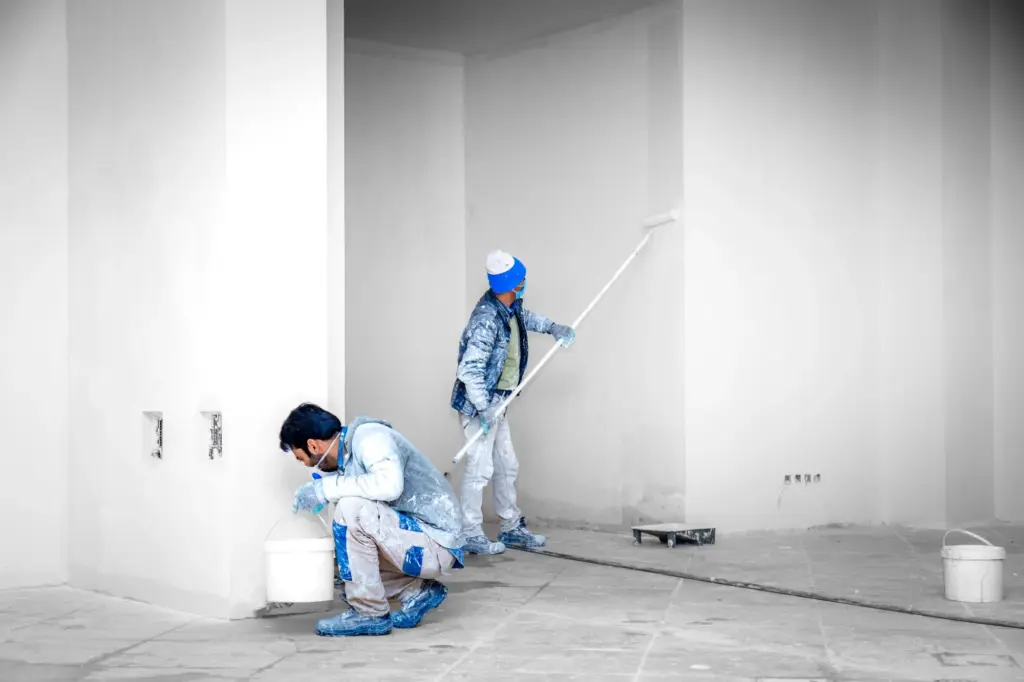
The biggest difference between commercial and industrial painting is the purpose of the coating. Commercial painting generally focuses on the appearance and maintenance of business properties, while industrial painting places greater emphasis on specialized surface protection.
The following table summarizes the key differences.
| Factor | Commercial painting | Industrial painting |
| Primary purpose | Improve appearance and maintain building surfaces | Protect surfaces from demanding operating conditions |
| Typical locations | Offices, retail stores, restaurants, hotels, and commercial buildings | Factories, manufacturing plants, warehouses, processing facilities, and industrial sites |
| Common surfaces | Walls, ceilings, doors, trim, exterior siding, and common areas | Machinery, tanks, pipelines, structural steel, industrial floors, and concrete |
| Paint and coatings | Interior and exterior architectural paints, primers, and protective finishes | Corrosion-resistant, chemical-resistant, heat-resistant, and abrasion-resistant coatings where required |
| Surface preparation | Cleaning, filling holes, sanding, scraping, and priming | May require degreasing, abrasive blasting, rust removal, and specialized surface treatment |
| Equipment | Brushes, rollers, ladders, and paint sprayers, depending on the project | May include spray systems, abrasive blasting equipment, industrial access equipment, and specialized application tools |
| Safety requirements | Ventilation, suitable protective equipment, safe access, and control of paint fumes | May involve additional controls for chemicals, confined spaces, hazardous coatings, and industrial equipment |
| Scheduling | Often arranged around business hours, tenants, and customer access | Coordinated with production schedules, equipment shutdowns, and facility safety procedures |
| Cost factors | Area, paint type, surface condition, access, and scheduling | Coating specifications, preparation, equipment, safety measures, access, and inspection requirements |
1. Purpose and expected results
The intended result is one of the clearest differences between commercial and industrial painting.
Commercial painting: appearance and everyday protection
Commercial painting keeps a workspace clean and professional. Color choice, surface finish, uniformity, and longevity are all factors.
For example, a reception area may require a smooth, uniform finish that reflects the company’s branding. A high-traffic hallway might require a washable coating that can be cleaned regularly and will resist chipping and scuffing. The paint should be suitable for the room and should perform as expected in its normal function.
Industrial painting: protection against damage
The choice of industrial coating is mainly determined by the conditions the surface is exposed to. Steel exposed to moisture may require a corrosion-resistant coating system. Equipment used in a chemical processing environment may need a coating specifically designed to tolerate contact with particular chemicals.
Selecting an industrial coating based only on its color or appearance, without considering the protective requirements, can result in early failure.
The difference is that commercial painting usually begins with what the building and its occupants require. Industrial painting begins with understanding the surface and its operating conditions, and what it needs to be protected from.
2. Paint types and protective coatings
Different coating systems may be required for commercial and industrial painting depending on the surface conditions.
What paint is used for commercial buildings?
Architectural paint is typically the type of paint used in commercial projects for interior or exterior building surfaces. Depending on the application, these may include:
- Acrylic or latex-based paints. The most frequently used water-based paint types for interior walls and ceilings. They are easy to apply and clean up.
- Washable finishes. Useful in corridors, offices, retail spaces, and other areas that require regular cleaning.
- Exterior paints. Formulated for exposure to sunlight, rain, temperature changes, and other weather conditions.
- Primers and sealers. Used to prepare surfaces, improve adhesion, and help ensure a consistent finish.
- Special-purpose coatings. Selected for particular requirements, such as moisture resistance or improved durability.
The right selection depends on the substrate, surface condition, traffic, and maintenance requirements of the building. Some occupied buildings may also benefit from low-VOC or no-VOC products, though the EPA notes that these labels do not necessarily mean the product is free from all potentially undesirable emissions. Product composition, intended use, and ventilation still matter.
What coatings are used for industrial facilities?
Industrial projects may require more specialized products, including:
- Epoxy coatings. Applied when wear, chemical, or repeated cleaning resistance is required.
- Polyurethane coatings. Applied to provide a durable finish coat when both abrasion resistance and weathering properties are important.
- Zinc-rich primers. Used in certain protective systems to help protect steel against corrosion.
- Heat-resistant coatings. Designed for surfaces that experience elevated temperatures within the product’s specified limits.
- Chemical-resistant coatings. Selected according to the chemicals, concentrations, temperatures, and exposure conditions involved.
These coatings are not interchangeable. A coating that works on an industrial floor might not work for a hot metal surface or a tank exposed to corrosive chemicals. Selection of industrial coatings should be based on the manufacturer’s technical guidance and the project’s performance requirements. The complete system often consists of a primer, one or more intermediate coats, and a finish coat.
3. Surface preparation and application methods
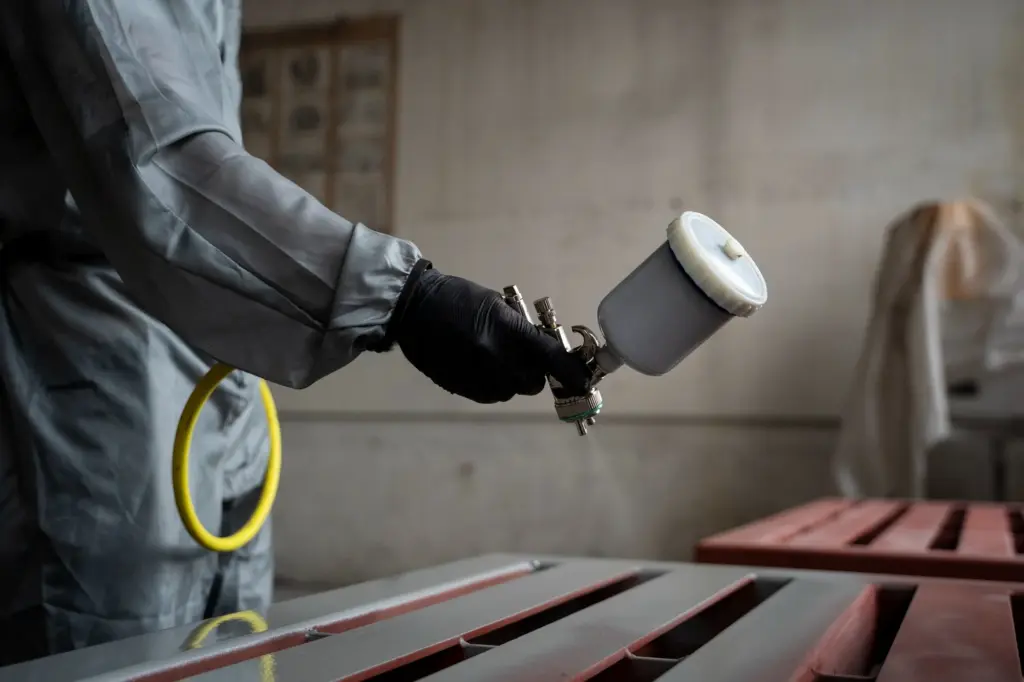
The outcome of a painting project is heavily influenced by what happens before the paint is applied. Preparation for commercial and industrial painting can vary significantly.
How are commercial surfaces prepared?
Commercial painting typically begins with a surface inspection. The contractor inspects the surface and identifies peeling paint, holes, cracks, stains, damaged trim, and other issues that could affect the finish.
Preparation may include:
- Moving or protecting furniture, fixtures, and equipment
- Covering floors and surrounding surfaces
- Cleaning walls and removing loose or peeling paint
- Filling small holes and repairing minor surface damage
- Sanding rough edges as necessary
Exterior projects may also require scraping, washing, caulking, and repairing damaged siding or trim. The goal is to provide a clean and stable surface for the new coating to adhere to and produce a uniform appearance.
How are industrial surfaces prepared?
Industrial preparation can be more extensive because coatings may need to resist harsh conditions. Metal surfaces may require the removal of rust, oil, grease, old coatings, and other contaminants. Contractors may use mechanical cleaning, abrasive blasting, or other preparation methods as appropriate to the project.
Concrete may need to be cleaned and prepared to achieve the surface condition required by the coating manufacturer. Existing coatings may also need to be tested or assessed before a new system is applied.
Preparation is especially important for corrosion protection. Rust, grease, or other contamination left under a coating can cause poor bonding or reduced protection. For industrial projects, the surface may need to be inspected prior to painting.
4. Safety requirements and environmental considerations
Safety is important in both commercial and industrial painting, but the hazards and controls can vary depending on the project.
Safety in commercial painting
Commercial painting often takes place in occupied or partially occupied buildings. Contractors need to account for employees, customers, tenants, visitors, and any other trades operating nearby.
Important precautions include:
- Providing suitable ventilation when paints or solvents are being used indoors
- Following product instructions and safety information
- Protecting nearby surfaces, equipment, and furniture
Paint fumes must also be managed. The EPA identifies paints, paint strippers, and solvents as potential sources of volatile organic compounds (VOCs). Concentrations of many VOCs can be up to 10 times higher indoors than outdoors, making paint selection and ventilation important considerations for indoor projects. Use of appropriate products, ventilation, and handling minimizes unnecessary exposures.
Safety in industrial painting
Depending on the facility and the coating system, additional hazards may exist in industrial painting. These can involve chemical exposure, flammable materials, inhaling particulate dust released during surface preparation, working at height, confined spaces, and painting near moving machinery.
The Occupational Safety and Health Administration (OSHA) identifies standards covering ventilation, spray finishing, respiratory protection, hazardous materials, and other aspects of spray operations.
Depending on the job, safety measures may include:
- Isolating the work area from operating equipment
- Providing appropriate ventilation and controlling airborne contaminants
- Selecting protective equipment based on the specific hazards
Not every industrial painting project requires the same controls. Requirements vary with materials, working environment, exposure hazards, and regulatory requirements. Both commercial and industrial painting contractors should evaluate each job individually rather than applying a general safety protocol to every project.
5. Cost differences between commercial and industrial painting
Industrial painting does not always cost more than commercial painting. The final price depends on the type of work, the coating system, and the conditions the surfaces face, not simply the project’s square footage.
The main difference is the type of work that needs to be done and what is expected of the final coating.
What affects commercial painting costs?
Typical factors used in commercial painting quotes include:
- The total area to be painted
- The condition of the existing walls, ceilings, or exterior surfaces
- The type and quality of paints
- The number of coats required
- Furniture movement, protection, and preparation
- Access to high walls, stairwells, or exterior areas
- After-hours or weekend scheduling
Preparation for a large office with sound walls can be relatively straightforward. More work may be required if the paint is peeling, drywall is damaged, or access is difficult.
What affects industrial painting costs?
Industrial painting costs are driven by factors that do not typically apply to commercial projects:
- Coating specifications and material costs. Specialized coatings such as epoxy, polyurethane, and zinc-rich primers cost more than standard architectural paints. Some systems require multiple coats with specific thickness and curing requirements.
- Surface preparation complexity. Industrial surfaces may need degreasing, abrasive blasting, rust removal, or specialized treatment before coating. More demanding preparation increases both labor and equipment costs.
- Safety equipment and controls. Projects involving chemicals, confined spaces, or hazardous coatings may require additional protective equipment, ventilation systems, and safety measures.
- Access and facility shutdown coordination. Painting near operating equipment, in elevated locations, or in restricted areas may require equipment shutdowns, specialized access equipment, and coordination with facility operations.
- Inspection and testing requirements. Some industrial projects require surface profile measurement, coating thickness verification, adhesion testing, or third-party inspection at various stages.
- Environmental compliance. Projects involving hazardous coatings or surface removal (such as lead paint) may require containment, waste handling, and regulatory compliance.
How to Choose the Right Painting Contractor

After you have determined the kind of painting your property requires, the next step is selecting a contractor with the experience and process to handle the job.
Consider the following factors before making a decision.
1. Relevant project experience
Ask about similar surfaces, building types, and operating environments they have worked with. Commercial building painting and specialized industrial coating work can each require different skills and equipment.
2. A clear scope of work
The estimate should describe the full scope. This could include surface preparation, repairs, primers, finish coats, materials, labor, cleanup, and anything else required.
3. Appropriate materials
The contractor should be able to explain why a particular paint or coating is suitable for the surface. Industrial projects may also require product data sheets and documented application specifications.
4. Safety and insurance
Confirm that the contractor carries appropriate insurance and follows applicable safety requirements. For industrial work, ask how the contractor handles the specific hazards at the job site and the materials being used.
5. A realistic schedule
The schedule should account for preparation, application, drying or curing, access restrictions, and the effect of the work on employees, tenants, customers, or production.
6. Responsive to questions and concerns
A detailed written quote helps you understand the scope of the work and compare offers. Ask how unexpected repairs, scope changes, or extra work will be addressed.
Hiring the right contractor for the job, not the cheapest one, helps minimize the risk of improper preparation, incompatible coatings, and unnecessary delays.
Conclusion
The right choice between commercial and industrial painting depends on the surface being painted and the conditions it faces. Identify the project’s purpose, match it to the correct service type, and evaluate contractors based on their relevant experience, materials, safety protocols, and scheduling approach.
For commercial painting in Seattle, Everblue Handy provides after-hours and weekend scheduling, flat-fee pricing, and property maintenance options for businesses that need minimal disruption to regular operations.