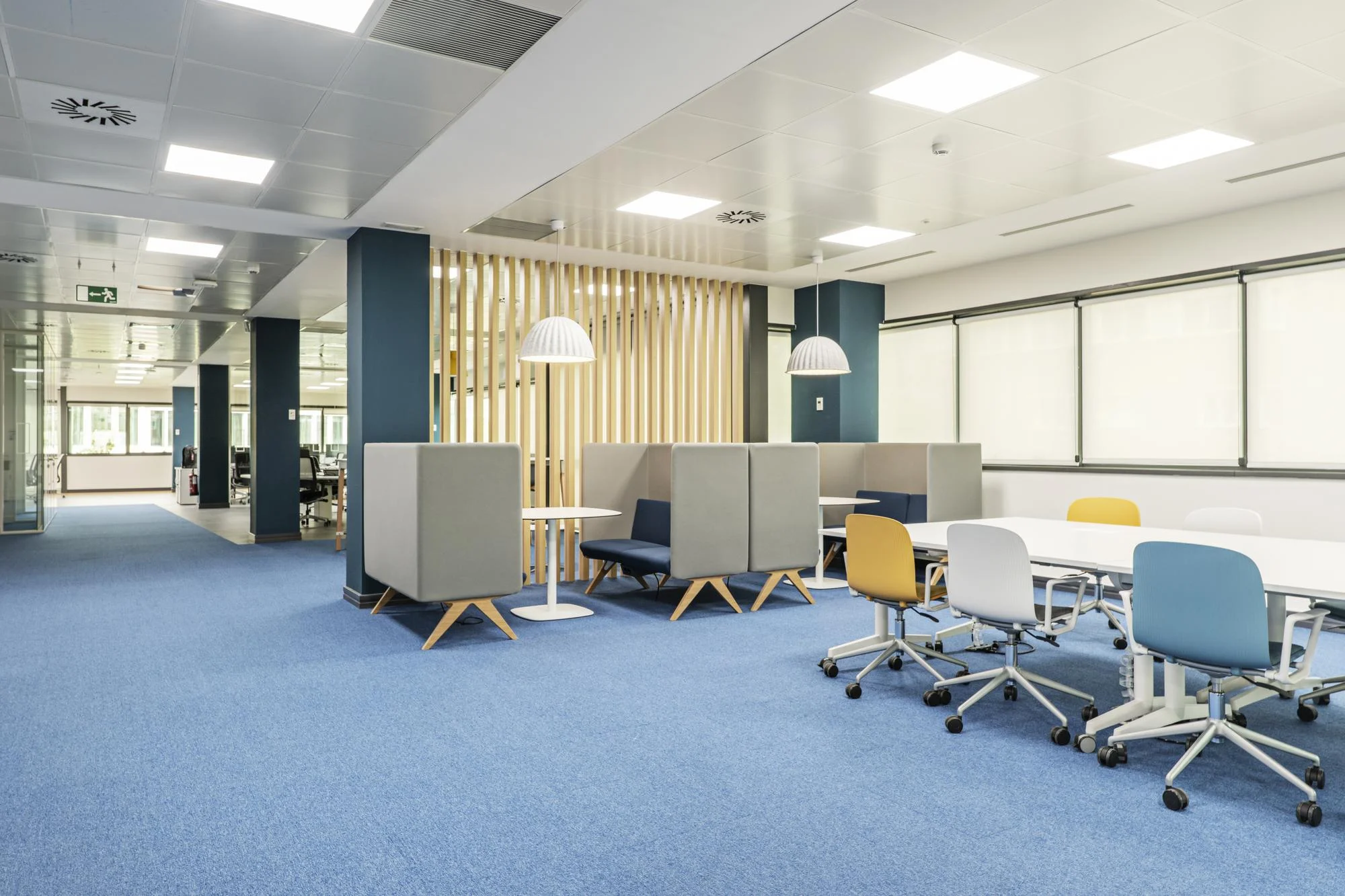
Every square foot of office carpet represents a business investment. And a poor installation can turn that investment into an avoidable replacement bill. If you are planning to carpet your office in Seattle, the biggest risk won’t be choosing a carpet that looks good on day one. Rather, it’s paying for a floor that develops loose seams, moisture damage, premature wear, or subfloor problems just because critical installations were overlooked.
Seattle’s wet conditions add another layer of consideration. Yet the broader challenge is ensuring your materials, floor preparation, labor, installation method, and project schedule work together without creating unnecessary costs or disrupting your operations. You have already decided to install the carpet. All you need to do now is execute the project correctly.
That’s why we have prepared a detailed guide, which covers the complete process of office carpet installation in Seattle. Whether it’s guiding you on how to budget properly or walking you through material selection and long-term maintenance needs, this comprehensive knowledge source is what you need for your project.
How does Seattle’s climate affect office carpet installation and performance?
Your carpet does not need to sit outside in Seattle’s rain for the climate to affect its performance and longevity. Every wet shoe, damp umbrella, and moisture-tracked entryway brings part of that environment into your office. Over time, this exposure becomes a flooring-maintenance and replacement-cost issue.
For your office, this makes moisture management more important than simply selecting a durable carpet. Entrances and high-traffic corridors receive the greatest exposure to water and grit, which is why these areas need:
- Appropriate carpet specifications
- Effective entry matting
- A maintenance plan capable of handling repeated moisture and soil loading
The installation also needs to begin with a properly evaluated and adequately dry subfloor. Installing carpet over a moisture-compromised substrate will create problems with adhesives, backing, odors, and overall flooring performance. Moisture testing and subfloor preparation belong in your installation scope rather than being treated as optional extras.
The carpet format and maintenance strategy also matter. Carpet tiles provide a practical advantage in heavily trafficked or moisture-prone areas because individual damaged sections can be replaced rather than disturbing an entire installation. Broadloom carpet requires greater attention to seam placement and replacement planning, as localized damage is more difficult to address.
The key Seattle-specific consideration is not simply rain. It is how repeatedly introduced moisture moves through your office flooring system and affects maintenance, appearance, adhesion, and service life. Planning for that exposure during installation helps prevent climate-related problems from becoming recurring operating expenses.
What should you consider before installing carpet in a Seattle office?
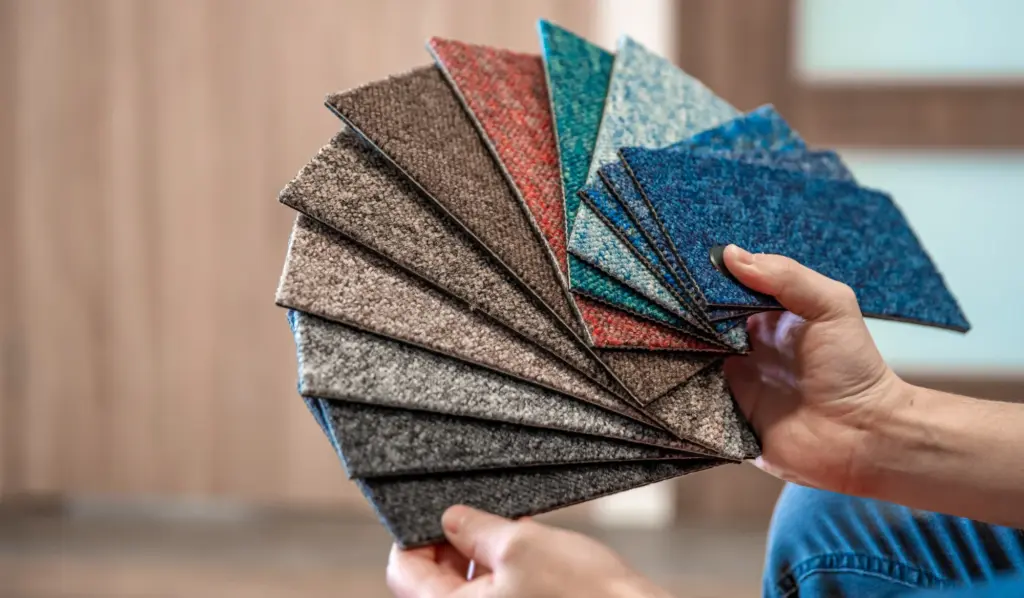
Before the carpet arrives at your Seattle office, several decisions will determine whether the finished floor performs as expected or creates problems later. The installation itself is only one stage of the project. From floor conditions to moisture, traffic, and workspace planning, the following factors deserve attention before work begins.
1. Get the concrete/subfloor condition into the quote
Do not accept a carpet quote based only on square footage. Ask the installer to identify the concrete’s or existing substrate’s condition and provide an estimate for the required surface preparation separately. Patching, adhesive removal, grinding, or leveling can materially change the project cost and timeline. CRI 104, the Carpet and Rug Institute’s commercial installation standard, treats substrate condition and floor levelness as part of installation planning. These issues need to be resolved before carpet installation begins.
2. Specify the installation method before comparing contractors
The installation method should appear in the specification before you compare bids. Direct glue-down, double-glue, and stretch-in systems have different requirements and performance characteristics. For example, the glue-down technique is better suited for rolling traffic, while stretch-in installation has limitations around heavy rolling loads and systems furniture. Comparing two bids without specifying the method means you are not comparing equivalent installations.
3. Plan broadloom seams before carpet is ordered
With broadloom carpet, seam placement should be determined during planning rather than left to the installer. Your installation plans should identify the appropriate seam locations and special floor conditions. In a conference room or executive area, placing seams in prominent sightlines can make the finished floor look inconsistent even when the carpet itself meets specifications. Approve the seam plan with the installer before material is cut.
4. Determine where carpet tiles should be used for future repairs
If your office in Seattle has concentrated wear around corridors, entrances, coffee stations, or workstation aisles, carpet tiles will give a better replacement strategy than broadloom. A damaged tile can be removed without cutting into a large continuous carpet installation. This does not automatically make tile cheaper upfront, but it can significantly reduce the scope of future repairs. Keep replacement tiles from the original installation so that later repairs can match the existing flooring layout and visual appeal.
5. Verify concrete moisture before installation day
Do not wait until the installation day to discover that the concrete slab has excess moisture. Ask your flooring contractor to test the slab before carpet, adhesive, or cushion is delivered and confirm the results against the flooring manufacturer’s requirements. If moisture levels are too high, installation may need to be delayed or the slab treated first. Identifying this early protects your material investment, avoids wasted installation labor, and prevents moisture-related adhesive failures.
6. Separate carpet removal from subfloor preparation in the scope
When replacing existing carpet, make sure the contractor identifies removal, adhesive scraping, surface cleaning, patching, leveling, and disposal as separate scope items. Otherwise, a low bid can simply reflect fewer included services. This matters most when an older office in Seattle has multiple flooring layers or adhesive residues underneath. A bid that clearly separates preparation costs helps you compare contractors and control change orders.
7. Calculate the cost of working around occupied workspaces
For an operating office, installation labor is only part of the disruption cost. Workstations will have to be emptied, employees relocated, meeting rooms closed, and equipment moved before the contractors can access the floor. Divide the project into workable zones and establish which areas should remain operational. A phased installation allows your business to continue functioning while flooring work progresses rather than requiring a full office shutdown.
8. Match the carpet backing and cushion to the installation system
Do not select the carpet based only on face fiber, color, or appearance. The backing and cushion system must be compatible with the specified installation method and the office’s traffic conditions. Certain backing systems are intended for specific installation methods, and cushion selection affects the project’s scope and performance. Confirm the complete carpet, backing, adhesive, and cushion specifications before approving the purchase order.
9. Document the exact product for future replacement and warranty claims
Record the carpet manufacturer’s name, product line, color, pattern, dye lot, backing, adhesive, installation method, and purchase documentation after the project is completed. This information becomes valuable when a section needs repair several years later or when a warranty issue arises. For carpet tile, retaining spare material is the more practical approach. Without accurate product records, a small repair can become a larger replacement exercise.
How to choose the right commercial carpet for your Seattle office
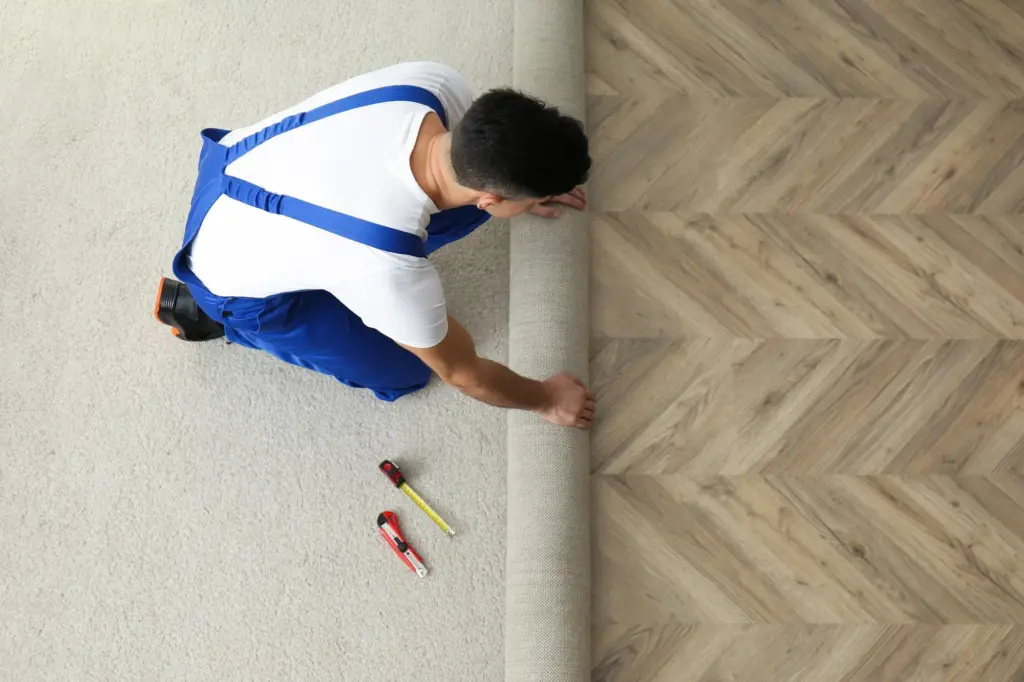
Choose a commercial carpet based on how each area of your Seattle office is used, not simply on price or appearance. Rolling loads, traffic levels, cleaning frequency, moisture exposure, and future repair needs all affect the specification. The key factors to consider are outlined below.
1. Match carpet construction to traffic levels
Reception areas, corridors, elevator approaches, and open workspaces experience heavier traffic than private offices. Specify carpet construction according to these differences rather than using one specification everywhere. Investing in higher durability where traffic is concentrated helps control replacement costs, while lower-demand areas do not need unnecessarily expensive carpet.
2. Choose fiber based on cleaning and wear requirements
Fiber selection affects how your carpet handles daily wear, stains, cleaning, and appearance retention. Compare commercial nylon, polyester, and solution-dyed options according to your maintenance requirements and traffic levels. Choosing based on lifecycle performance rather than sample appearance helps prevent a low initial purchase price from becoming an expensive maintenance decision.
3. Pay attention to carpet density and construction
Look beyond the sample when comparing commercial carpets for Seattle office buildings. Pile density, construction, and weight influence how the surface responds to repeated foot traffic and furniture loads. Ask suppliers for technical specifications and warranty classifications. This helps you compare products based on measurable performance characteristics instead of selecting the cheapest visually similar option.
4. Select carpet backing for the installation environment
Carpet backing affects dimensional stability, installation requirements, and overall floor performance. Confirm that the selected backing works with your chosen installation method, adhesive, and substrate. Making this decision before ordering prevents situations where a preferred carpet requires different installation materials or labor than your contractor originally included in the quoted price.
5. Check warranty requirements before purchasing
Review warranty conditions before approving the carpet order, especially the requirements covering installation, adhesive, cleaning, traffic, and maintenance. Ask the supplier to confirm the proposed installation system meets those conditions. This creates a clearer record of what your business must do to preserve warranty coverage if performance problems occur later.
Carpet Tiles Vs. Broadloom Carpet: Which Installation Format Fits Your Office
For your Seattle office, the choice between carpet tiles and broadloom carpet comes down to what you want to optimize after installation: easier maintenance and targeted replacement, or a seamless finished appearance. Carpet tiles are useful when your office has busy entrances, corridors, or work areas where isolated sections are likely to wear or become stained. Replacing a few damaged tiles near an entrance does not require disturbing the surrounding areas.
Broadloom carpet takes the opposite approach, delivering a continuous surface with fewer visible breaks. It is suited to large open offices, conference rooms, and executive areas where visual consistency matters most. Your traffic patterns, moisture exposure, office layout, maintenance expectations, and long-term replacement strategy should determine which installation format makes greater business sense.
| Factor | Carpet tiles | Broadloom carpet |
| Installation | Modular and relatively straightforward | Requires larger continuous installation |
| Replacement | Individual tiles can be replaced | Damaged sections require cutting and patching |
| Moisture-prone areas | Easier to manage localized damage | Greater concern around affected sections |
| Appearance | Visible tile seams/grid pattern | Continuous, seamless appearance |
| Design flexibility | Easy to combine patterns and colors | Strong for consistent, uniform designs |
| High-traffic areas | Practical for targeted replacement | Wear is managed across larger sections |
| Installation waste | Generally easier to control | More cutting waste is possible |
| Business disruption | Suitable for phased replacement | Larger areas may need to be addressed together |
| Best suited for | High-traffic, flexible workplaces | Large spaces needing a continuous finish |
| Long-term consideration | Easier localized maintenance | Strong visual continuity, but repairs are less localized |
How Much Does Office Carpet Installation Cost In Seattle?
For your Seattle business, plan on roughly $4-$15 per square foot for a commercial carpet project, with material and installation included. Suppose your office has a flooring area of 2,000 sq. ft. Therefore, to carpet this entire floor, you should budget around $12K-$26K for a standard project scope. The final quote, however, will depend on carpet grade, carpet tile versus broadloom, existing floor removal, subfloor condition, installation method, furniture handling, disposal, and the complexity of your office’s floor layout.
| Cost component | Typical Seattle range | What it covers |
| Commercial carpet | $1–$6+ / sq. ft. | Carpet material, with pricing increasing for higher-grade, denser, or specialty products |
| Installation labor | $0.88–$5 / sq. ft. | Cutting, fitting, seams, adhesive or installation system, and labor |
| Supplies and accessories | $0.28–$2 / sq. ft. | Adhesives, transitions, tack strips, and other installation materials |
| Existing carpet removal | About $0.50–$1.50 / sq. ft. | Removal and disposal of conventional existing carpet; glued-down flooring can cost substantially more |
| Subfloor preparation | Varies by condition | Patching, leveling, cleaning, moisture-related preparation, or other corrective work |
| Equipment and disposal | $0.19–$1 / sq. ft. | Equipment, hauling, waste, and disposal-related costs |
What drives cost up
- Damaged or water-affected subfloors that need repair before installation can begin.
- Multiple flooring layers or adhesive residues from previous installations increase removal labor.
- Complex office layouts with columns, built-ins, corners, and irregular floor areas require more cutting, fitting, and seam work.
- Furniture handling adds to the project when installers need to move workstations, desks, cabinets, and equipment before accessing the floor.
- The type and quality of carpet selected sets the baseline for material costs, with commercial-grade density, fiber backing, stain resistance, and warranty requirements pushing the price higher.
What keeps cost predictable
- Flat-fee written quotes lock in the total before work begins.
- If a contractor prices by the hour or provides an open-ended estimate, mid-job additions become likely.
- A fixed-price written quote that includes all prep work, products, and labor is the most reliable way to avoid invoice surprises on a large facility project.
Common office carpet installation mistakes that increase business costs
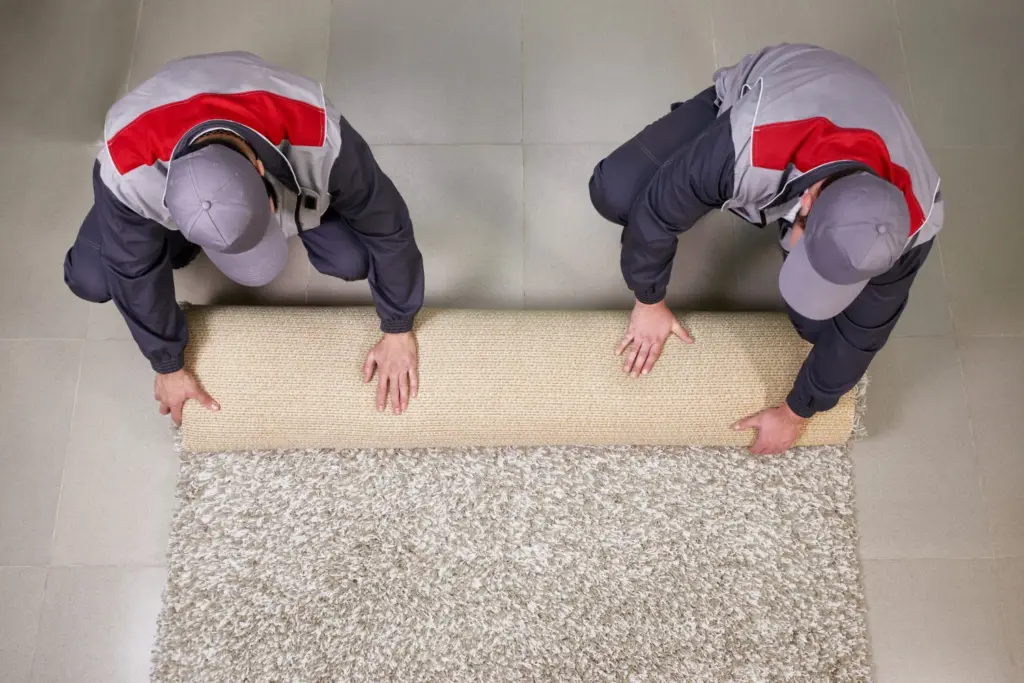
A carpet installation can exceed its original budget even when the carpet itself was purchased at a competitive price. Most avoidable costs come from incomplete project scopes, poor substrate preparation, incorrect installation methods, and inadequate planning around an occupied office. Identifying these mistakes before work begins gives you greater control over the final project cost.
1. Comparing contractors on carpet price alone
A lower per-square-foot quote does not necessarily represent a lower project cost. One contractor may exclude adhesive removal, floor preparation, furniture movement, disposal, or after-hours labor. Compare contractors using an identical scope of work so that you can evaluate installation costs on the same deliverables rather than competing just on headline prices.
2. Installing over an unprepared subfloor
Covering cracks, uneven concrete, adhesive residue, or other substrate problems with new carpet transfers an existing floor problem into the new installation. Uneven areas can affect appearance and performance, while inadequate preparation will require rework. Identify the preparation requirements and get a quote estimate before installation begins.
3. Skipping moisture testing
Installing carpet before confirming concrete moisture conditions creates unnecessary financial exposure. Excess moisture can interfere with adhesives and contribute to flooring failure, forcing sections to be removed and reinstalled. Test the slab before installation and establish who is responsible for mitigation if readings exceed the flooring manufacturer’s requirements.
4. Poorly planning broadloom seams
Treating seam placement as an installation-day decision can create visible joints in prominent areas or increase material waste. Plan seams around the room geometry, traffic patterns, furniture layouts, and major sight lines before cutting begins. A documented seam plan reduces avoidable rework and gives the installer clear expectations.
5. Failing to account for carpet waste
Budgeting exactly for measured floor area can leave you short of material once cutting requirements are considered. Columns, irregular rooms, doorways, pattern matching, and broadloom roll dimensions create waste. Have the installer calculate the required quantity and expected waste before ordering rather than discovering a shortage mid-project.
6. Scheduling installation without accounting for business operations
Installing an entire occupied office at once can create unnecessary downtime. Employees may lose workstation access. Conference rooms may become unavailable. Installation areas may restrict normal movement. Divide the project into workable zones and schedule installation around business-critical spaces to maintain operations while flooring work progresses.
How to choose the best office carpet installation company in Seattle
Choosing a Seattle carpet installer is not simply about finding a company with a large flooring catalog. You need a contractor who understands commercial installation requirements, occupied-office scheduling, concrete preparation, moisture conditions, material logistics, and Washington contractor requirements. The factors below will help you separate a suitable commercial installer from a contractor primarily experienced in residential flooring.
1. Verify Washington contractor registration
Start by checking if the flooring contractor is registered with Washington State Labor & Industries. Installing floor coverings is among the activities for which contractor registration requirements can apply. Confirm the registration before requesting a final contract, rather than relying on a contractor’s website or estimate alone. Washington L&I also requires registered contractors to maintain applicable bond and insurance.
2. Look for commercial office installation experience
Ask for recent Seattle-area projects involving offices similar to yours in size, occupancy, and flooring type. Residential carpet experience does not necessarily demonstrate competence with commercial broadloom, carpet tile, large furniture layouts, phased installation, or occupied workspaces. Ask specifically how the contractor handled seam planning, floor preparation, material staging, and business-hours restrictions on comparable projects.
3. Ask for a detailed site assessment
A serious commercial installer should inspect the actual space before providing a final installation price. The assessment must cover existing flooring, concrete condition, moisture, transitions, stairs, columns, built-ins, furniture, access routes, and areas requiring phased installation. A detailed site visit gives you a more reliable scope than pricing based solely on your office’s square footage.
4. Make the contractor explain the installation system
Your installer should be able to explain why the proposed system, such as direct glue-down or another commercial installation method, is appropriate for your carpet, substrate, traffic, and furniture configuration. Ask for the complete specification covering carpet backing, adhesion, cushioning, seams, and transitions.
5. Compare contractors using the same scope
Send every contractor the same floor plan and written scope covering removal, preparation, moisture testing, carpet, adhesive, installation, furniture handling, transition, disposal, cleanup, and after-hours work. Then compare the proposals line by line. This prevents a contractor from appearing cheaper simply because preparation or logistical services have been excluded from the initial price.
6. Review the closeout and warranty process
Before signing, establish what documentation you will receive after installation. Request the final product information, installation method, adhesive specification, warranty documentation, maintenance requirements, and details of any retained spare carpet or tiles. A proper closeout package makes future repairs easier and gives you documentation if installation-related defects or warranty issues emerge after the contractor has left.
Conclusion
Office carpet installation in Seattle is a project-management and cost-control decision, not simply a flooring purchase. The right carpet, installation method, moisture preparation, contractor scope, and scheduling strategy determine how well your flooring performs and how much you spend over its service life. Before work begins, make sure every cost, preparation requirement, installation detail, and business-disruption issue is documented.
A licensed contractor who assesses the site before quoting, provides a written flat-fee price covering the full scope, and schedules work around your operations removes most of the coordination friction that makes office flooring projects difficult to manage.