
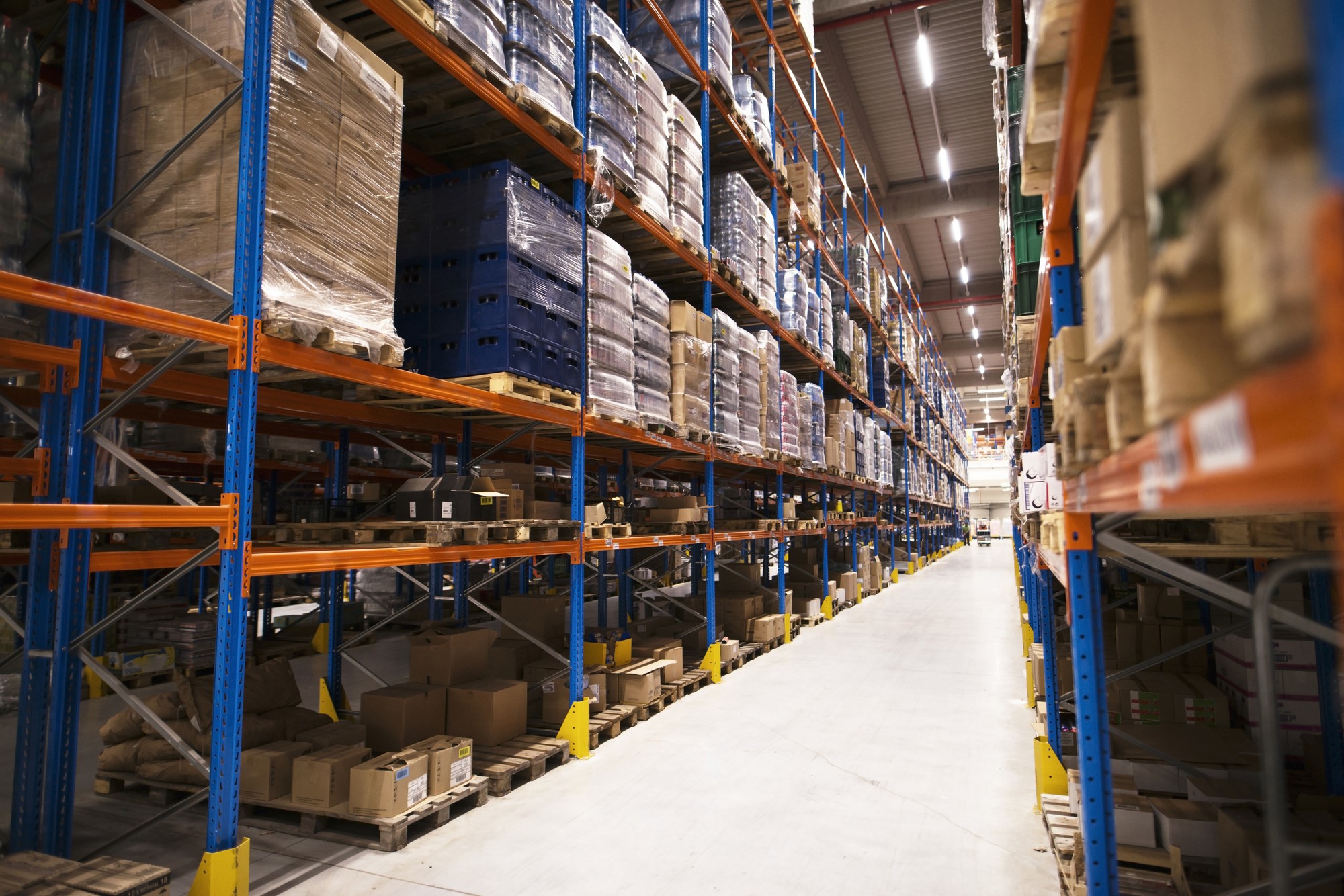
The right commercial shelving system is one of the highest-return investments a warehouse, office, or storage facility can make. It determines how much inventory fits in your available space, how quickly staff can locate and move stock, how safely the operation runs, and whether the storage layout can scale with business growth.
The wrong system costs more in lost productivity, damaged stock, and early replacement than it ever saved upfront.
This guide covers how to select the right commercial shelving or industrial shelving system for your business: the types available and what each is built for, how to match them to your storage requirements, what drives cost differences, common purchasing mistakes, and what to look for in a commercial shelving installation partner.
Why Does Choosing The Right Commercial Shelving System Matter?
Choosing the proper shelving for a business involves much more than just keeping things organized; rather, it affects your efficiency and safety on many levels. Choosing the right shelving helps operations run more efficiently and eliminates unnecessary storage costs.
1. Better Use of Vertical Space
Commercial shelving systems utilize vertical storage, allowing firms to store more inventory in minimal floor space, which is especially beneficial in space-constrained places.
2. Increased Productivity
An organized shelving system makes it easier for people to access, obtain, and return items in the least time possible. This reduces the time spent finding items in places like warehouses and retail shops.
3. Increased Safety
Proper installation of commercial shelving also increases workplace safety. Installing shelves with adequate weight capacity helps prevent overloading, which can cause shelves to collapse and stored items to fall.
4. Money Saving
Proper shelving increases the visibility of items stored in the warehouse, thereby improving the efficiency of inventory management and reducing the cost of replacing lost or overordered items.
5. Growth and Scalability Needs
With growing enterprises come changes in the amount of storage required. Modular commercial shelving systems, both scalable and customizable, enable companies to increase their storage capacity without having to scrap out their whole shelving system.
If you want to learn more about the benefits of commercial shelving for your business, read this blog, “How Commercial Shelving Improves Warehouse Organization and Efficiency”.
How To Choose The Right Commercial Shelving System For Your Business?
The right commercial shelving involves more than just identifying the best design to fit your space. What you need is a commercial shelving solution that will help your operations, store your inventory, and evolve as your company grows.
1. Consider Your Storage Requirements
The type of inventory you store is the primary factor in selecting the right commercial shelving system. Depending on the product, different types of shelving will work better than others. For example, boxed inventory items and office documents can be placed on standard steel shelving, while loose inventory might require shelves with dividers or bins. Machinery and industrial goods will require shelves capable of supporting heavy loads. Food items and medical supplies need to be kept on cleanable, hygienic shelves, such as stainless-steel shelves. To make your choice easier, consider the size, weight, and handling of the inventory items.

2. Consider Load Capacity
Each shelving system has its specific capacity that shouldn’t be exceeded. You need to consider not only the individual shelf capacity but also the capacity of the whole shelving unit. It’s also worth distinguishing between static and dynamic loads, which refers to whether the items you are going to store will be moved around or just placed on the shelf and won’t move again.
3. The Available Space
You must measure accurately before buying any shelves. You need to consider the floor area and ceiling height to determine whether vertical storage can be used effectively. Take into account the clear space that allows free passage for your workers and devices, such as carts and forklifts, while providing a safe means of escape in case of fire.
4. Industry Requirements
Different industries have varying needs for the available storage space. Shelf space in the retail industry should provide customers with visibility into their goods, while manufacturing industries should use robust shelves to store heavy products. Hotels and restaurants require shelves that are corrosion-resistant and hygienic. Warehouses focus on dense storage, while offices require shelving for documentation.
5. Needs for Accessibility
Think about how often you will need to reach the stored items. Those materials that are frequently used should be stored in places where they are easy to pick up without moving around too much, which will make the job easier and faster.
6. Choice of Material
There are many materials that can be used in a shelving unit, each with distinct characteristics. It is important to choose the most appropriate option, as it will affect the structure’s durability and maintenance. For instance, steel is a good choice for a regular shelving unit, but stainless steel is better for kitchens and other areas. Aluminum is lightweight, rust-resistant, and used in specific commercial applications. Wire shelving is good for ventilation and easy cleaning, but there is also heavy-duty plastic shelving that does not absorb water and withstands many chemicals.
7. Planning for Future Expansion
As your business grows, storage requirements will change. You should buy a modular shelving system with adjustable or expandable shelves. This way, when you want to expand in the future, you will not have to replace your current shelving system; it will continue to serve you well.
Which Commercial Shelving System Is Best For Your Business?
The shelving needs of various organizations differ; therefore, no single solution can fit all. The best shelving for business purposes will vary depending on several factors, including the types of items stored, available space, weight capacity, access needs, and operational flow. The chart that follows provides information about major types of commercial shelving, their characteristics, advantages, disadvantages, and applications.
| Shelving System | Key Features | Advantages | Limitations | Best Industries For |
| Steel Shelving | Durable steel construction, adjustable shelves, available in multiple sizes and load capacities | Strong and long-lasting, supports medium to heavy loads, versatile, and easy to reconfigure | Heavier than other shelving types and may corrode in damp environments if not properly coated | Ideal for warehouses, offices, workshops, manufacturing facilities, stockrooms, automotive businesses, and educational institutions |
| Wire Shelving | Open-wire design, adjustable shelves, corrosion-resistant finishes | Promotes air circulation, resists moisture, easy to clean and sanitize, lightweight | Less suitable for storing very small items without shelf liners | Best for healthcare facilities, restaurants, commercial kitchens, laboratories, supermarkets, and cold storage |
| Rivet Shelving | Boltless assembly, adjustable shelves, heavy-duty construction | Quick installation, high load capacity, durable, and cost-effective for industrial storage | Industrial appearance makes it less suitable for retail displays | Commonly used in warehouses, manufacturing plants, garages, workshops, and distribution centers |
| Pallet Racking Systems | Designed for forklift access, vertical storage, and multiple rack configurations | Maximizes warehouse space, supports high-density storage, improves inventory organization, and handles heavy palletized loads | Requires forklifts, trained operators, and adequate warehouse clearance | Ideal for warehouses, logistics centers, wholesalers, manufacturing plants, and distribution facilities |
| Mobile Shelving Systems | Shelving units mounted on sliding tracks with manual or motorized operation | Saves floor space, increases storage capacity, and enhances security with lockable systems | Higher initial investment and slower access if multiple users need different aisles simultaneously | Suitable for offices, libraries, healthcare facilities, museums, archives, government institutions, and law firms |
| Cantilever Shelving | Open-front design with projecting arms and no front columns | Easily stores long, bulky, or irregularly shaped materials, allowing convenient loading and unloading | Not suitable for small boxed items or products requiring flat shelving surfaces | Ideal for construction suppliers, lumber yards, furniture manufacturers, steel distributors, and industrial facilities |
| Gondola Shelving | Freestanding floor units with adjustable shelves, hooks, dividers, and merchandising accessories | Excellent product visibility, highly customizable, improves customer accessibility, and is easy to rearrange | Not designed for heavy loads or industrial storage; weight capacity per shelf is typically limited to 100–200 lbs | Best for supermarkets, convenience stores, pharmacies, hardware stores, department stores, and specialty retail outlets |

How Much Does A Commercial Shelving System Cost?
Commercial shelving systems typically cost anywhere from $80 per unit for basic shelving to $15,000+ for large mobile shelving systems based on the type and project requirements. The overall charge will vary based on the materials used, the load-bearing capacity of the rack or shelf system, the size, customization, and installation process. Office or stockroom shelving will be cheaper than specialized racking or shelving designed for warehouses, where greater strength and space optimization are needed.
| Shelving Type | Estimated Cost |
| Steel Shelving | $80–$300 per unit |
| Wire Shelving | $100–$400 per unit |
| Rivet Shelving | $150–$500 per unit |
| Gondola Shelving | $100–$350 per section |
| Cantilever Shelving | $300–$2,000+ per bay |
| Pallet Racking Systems | $150–$600 per pallet position or $1,000–$5,000+ per rack system |
| Mobile Shelving Systems | $ 2,000- $ 15,000+ per system |
Note: The above prices are rough estimates and may depend on factors such as dimensions, weight capacity, material type, brand, customization, installation costs, etc. If your firm needs larger solutions, a quotation must be obtained from a reliable shelving company or installer.
Common Mistakes Businesses Make When Buying Commercial Shelving
Choosing the right commercial shelving system could help improve storage efficiency, safety, and productivity. Organizations often prioritize immediate needs when purchasing such systems, which may fail to serve their purpose in the long run. Avoiding these common mistakes could be highly advantageous.
● Buying Only Based on Cost: Selecting the least expensive option without considering load rating and durability will result in early failure, constant repairs, and premature replacement.
● Neglecting the Weight Capacity: Each shelf has a maximum weight limit that must not be exceeded; otherwise, your shelves may deform, collapse, or even break.
● Overlooking the Space Availability: When choosing shelves, it is essential to measure your actual space, as otherwise you risk buying a shelving system that won’t suit your needs.
● Neglecting Future Growth: Many organizations buy shelves based on their current inventory. However, in the future, there may be a need to replace them due to insufficient capacity.
● Not Adhering to Safety Regulations: Professional installation to OSHA standards and regular load inspections are the only reliable way to prevent shelving-related workplace incidents.
Why Choose Everblue Handy For Commercial Shelving Installation?
A proper installation ensures that your shelving is durable, optimized for daily use, and, most importantly, safe. That’s why choosing the right installation partner is important.
Everblue Handy installs commercial shelving across Seattle, Bellevue, Kirkland, Redmond, and 13 additional Puget Sound cities, professional commercial installation services that are specifically tailored to your needs
Some of the reasons why you should choose Everblue Handy:
- Everblue Handy holds WA Contractor Licence No. EVERBH826MU, verifiable at secure.lni.wa.gov. The company is fully bonded and insured, a requirement for commercial shelving installation work valued above $500 under Washington State L&I regulations
- Everblue offers after-hours and weekend scheduling for all commercial shelving installations outside standard business hours by default. Warehouses, offices, and managed facilities are never disrupted during operational hours.
- Every shelving installation is quoted as a fixed fee after the site walkthrough. The number you approve before work begins is the number on your invoice.
- We offer customized storage solutions to businesses and organizations to meet specific requirements
- To reduce workplace risks, we focus on a safety-focused installation process that follows manufacturer guidelines
- By ensuring efficient project completion, we enable businesses to resume their work without unnecessary delay
- We provide end-to-end support, from recommending the best shelving systems to professional installation
Conclusion
Choosing the right commercial shelving system is not a one-size decision. The best solution for a warehouse storing palletised goods on forklift access is entirely different from what works for a commercial kitchen, a healthcare facility, or a Puget Sound office needing document and equipment storage. Getting the shelving type, load rating, material, and layout right from the start avoids premature replacement, safety failures, and costly reconfiguration down the line.
The guidance in this article covers the core decisions. The next step is a site assessment with an installation partner who can confirm the right fit for your specific space, inventory, and operational requirements, and install the system to OSHA standards without disrupting your team.